
 Riley Phinisi Editorial Desk
Last updated: August 16, 2026 · Written from Labuan Bajo, aboard the fleet that sailed again the same afternoon.
Direct answer: As of August 16, 2026, a phinisi charter booked for 2027 should meet a clear checklist: certified life jackets for every guest, a drilled earthquake-and-tsunami protocol, BMKG weather monitoring, harbormaster (KSOP) clearance before every departure, working navigation and communication equipment, and a licensed, registered operator behind the vessel. These standards were tested for real on August 15, 2026, when a M7.7 earthquake struck ~200 km northeast of Labuan Bajo — and boats following them, including ours, kept every guest and crew member safe and were back on the water the same afternoon.
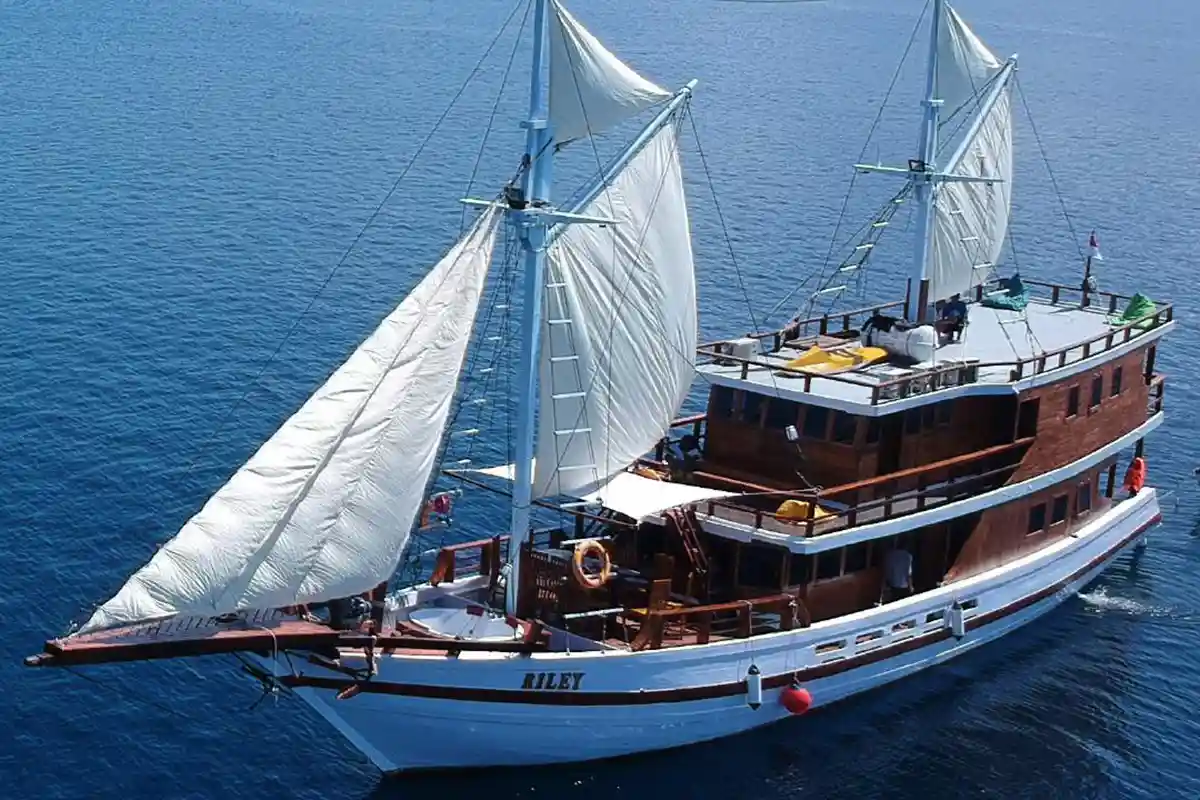
Riley is a traditional two-masted phinisi sailing the Komodo archipelago, and this page is written from her home port. Guests planning 2027 charters are asking sharper safety questions than ever — rightly so. Here is what a serious phinisi operation should be able to show you, and how those standards just proved themselves under the hardest test the region has faced in years.
What safety standards should a phinisi charter meet in 2027?
Before you pay a deposit for any Komodo liveaboard or day charter, the vessel should be able to demonstrate all of the following:
- Life jackets for every guest and crew member, stowed where guests can reach them, with a briefing on day one — not buried in a locker.
- A written earthquake and tsunami protocol the crew has actually drilled: move to deep water when at sea, move guests to high ground when ashore, account for every person by name.
- Official clearance discipline: departures only with harbormaster (Syahbandar/KSOP Labuan Bajo) clearance, and continuous BMKG weather and marine monitoring by the captain.
- Navigation and communication equipment — GPS, radio contact with shore operations, and a captain empowered to change the itinerary when conditions demand it.
- Fire safety and first aid — extinguishers, a stocked first-aid kit, and crew who know where both are.
- A tender/dinghy in good condition for landings and emergencies.
- A registered, verifiable operator — a real company with a legal entity, reviews you can check, and a crew roster, not just a persuasive chat account.
None of this is exotic. What separates operators is whether the standards exist on paper or in muscle memory. August 15 showed the difference.
How did the August 15, 2026 earthquake test Komodo liveaboard protocols?
At 05:58 WITA on Saturday, August 15, 2026, a magnitude 7.7 earthquake (initially estimated at M7.0 by BMKG, later revised) struck the sea north of Flores near Mbay, roughly 200 km northeast of Labuan Bajo, at a shallow depth of about 15 km. BMKG issued a tsunami early warning for the region.
This was the moment every safety briefing exists for. Crews at sea — ours included — put guests into life jackets per SOP and held vessels in deep water, where tsunami energy passes harmlessly. Guests ashore were moved to high ground. Every guest and crew member across the fleet was accounted for. No damaging tsunami formed; tide gauges recorded only small waves (about 0.36 m at Labuan Bajo), and BMKG lifted the warning roughly three hours later.
Then came the part that matters for anyone booking 2027: the Harbormaster (KSOP Labuan Bajo) officially reopened sailing the same day, through Maklumat Pelayaran No. 05/MP-VIII/2026, after BMKG declared the tsunami potential over. Boats — including the fleet Riley sails with — returned to the water that same afternoon. Komodo National Park was never closed, and trips ran normally on August 16. The Komodo Luxury team has published a full account of how liveaboard earthquake protocols performed that morning, and a broader situation report on whether Labuan Bajo is safe after the earthquake.
Our thoughts remain with central and eastern Flores — Nagekeo, Sikka, Manggarai and Manggarai Timur — where the damage was concentrated and dozens of lives were lost. Labuan Bajo, at the far western tip of Flores, sustained limited damage and kept functioning, but this region sails as one community, and we say so plainly.
Quick facts: the August 15 test
| Item | Fact |
|---|---|
| Earthquake | M7.7, 05:58 WITA, Aug 15, 2026 (BMKG; initial estimate M7.0, later revised) |
| Epicenter | Sea north of Flores near Mbay — ~200 km northeast of Labuan Bajo, ~15 km deep |
| Tsunami | No damaging tsunami; ~0.36 m recorded at Labuan Bajo; warning lifted in ~3 hours |
| Sailing status | Reopened same day — Maklumat Pelayaran No. 05/MP-VIII/2026 (KSOP Labuan Bajo) |
| Komodo National Park | Never closed; trips running normally from Aug 16 |
| Komodo Airport | Runway and apron declared safe, operating (brief taxiway inspection on day one) |
| Fleet outcome | All guests and crew safe and accounted for; boats sailing again the same afternoon |
What earthquake and tsunami protocols should your liveaboard have?
Ask any operator you are considering for 2027 to walk you through these five steps. A good one will answer without hesitation:
- At sea during a quake or warning: life jackets on, vessel holds position in deep water away from shorelines and harbors until authorities give the all-clear.
- Ashore during a warning: guests escorted to high ground immediately; no waiting to “see the water”.
- Headcount discipline: every guest and crew member accounted for by name, reported to shore operations.
- Authority-led decisions: sailing resumes only on official BMKG assessment and harbormaster clearance — never on gut feeling or commercial pressure.
- Guest communication: a clear promise of when you will hear a go/no-go decision, and a flexible rebooking guarantee if authorities restrict sailing on your dates.
How do you verify a phinisi operator is legitimate?
Safety in 2027 is not only about the sea — it is about who you book with. Labuan Bajo’s boom has attracted fraudulent sellers: in one widely reported case (covered by Detik and prompting a warning from Indonesia’s Ministry of Tourism), a bogus local agent took roughly Rp 244 million from travelers and left 22 tourists stranded without the boats they had paid for. We will not name the agent; we will name the lesson — verify before you transfer.
Charter bookings aboard Riley are handled through Komodo Luxury — a registered Indonesian PT under Juara Holding Group Limited with 1,500+ verified guest reviews (4.9/5 across Google and TripAdvisor). That is the level of verifiability you should demand from any operator: a legal entity you can look up, a review history you can read, and a crew that was demonstrably at sea keeping guests safe on August 15. If you are comparing vessels, start with a fleet whose standards are published, such as the luxury phinisi fleet in Komodo, and structure your trip as a private yacht charter in Komodo or a scheduled open trip with a company that answers the five protocol questions above in writing.
What would change this guidance?
This page reflects conditions as of August 16, 2026. Our guidance would change if any of the following occurred: BMKG issued a new warning for the region; the harbormaster suspended sailing from Labuan Bajo; Komodo Airport restricted operations; or authorities closed Komodo National Park. So far, none of these apply — sailing is officially open, the park never closed, and the airport is operating. We update this page when facts change.
Frequently asked questions from guests
I have a liveaboard trip to Komodo booked for next week — should I still go?
As of August 16, 2026, sailing from Labuan Bajo is officially reopened by the harbormaster (Maklumat Pelayaran No. 05/MP-VIII/2026) and trips are running normally. Departures follow BMKG and KSOP clearance day by day, so your operator should confirm your specific departure — a professional one will tell you exactly when you will hear.
Are Komodo Island tours still running after the quake?
Yes. Komodo National Park was never closed, boats returned to the water the same afternoon as the earthquake, and trips have run normally since August 16.
Is it too soon to do a boat trip from Labuan Bajo this week?
Sailing is open under official clearance, and vessels operate with full safety protocols. So far conditions are calm and controlled; captains continue to monitor BMKG updates as a matter of routine, quake or no quake.
Are there still aftershocks? Is it safe to come or should we cancel?
Aftershocks were felt in the days after the main quake, which is normal for an event of this size, and authorities continue to monitor. No operator should promise you the sea holds no risk — what a good one promises is drilled protocols, deep-water procedure, authority-led clearance, and a flexible rebooking guarantee if officials restrict sailing on your dates.
Komodo in 2027 — too early to worry?
For 2027 planning, the practical takeaway from August 15 is positive: the region’s authorities reopened sailing within a single day, the airport stayed operational, and fleet protocols worked exactly as designed. Book with a verified operator, ask the five protocol questions, and your 2027 charter rests on standards that have now been tested in the real world.
Riley sails from Labuan Bajo year-round. For 2027 charter dates and a written copy of the safety standards above, reach the team via the booking desk — and sail with a crew that was at sea, doing its job, the morning it mattered most.