
 Sunrise trek
Padar Island
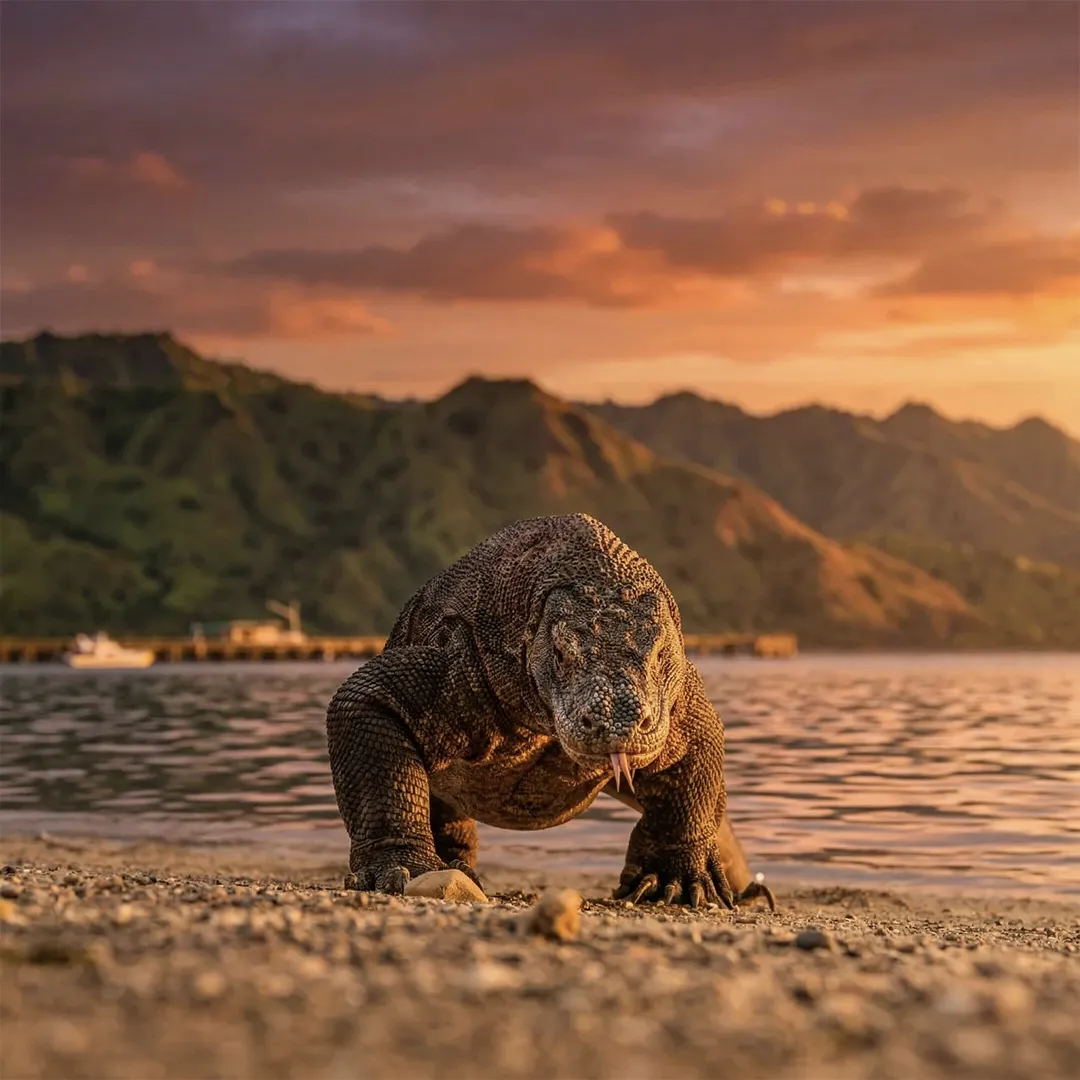
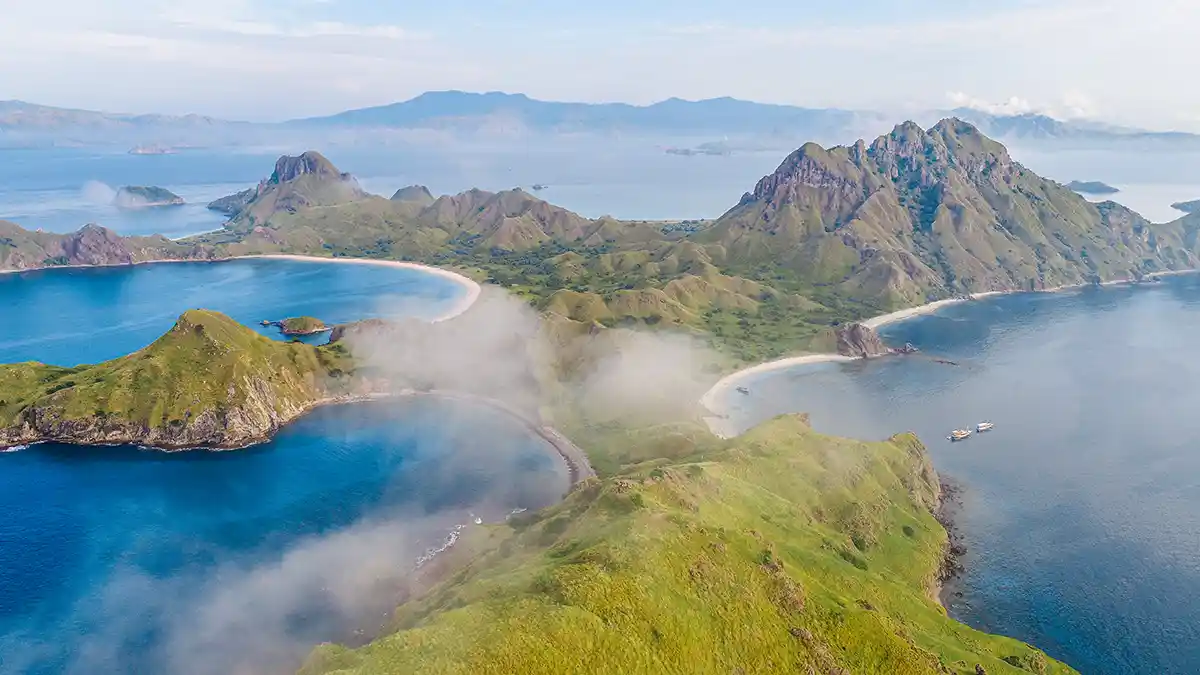
The most photographed viewpoint in Komodo. A short sunrise trek up cut steps opens onto three crescent bays — black, white and pink sand in one frame.
Destinations
Komodo National Park out of Labuan Bajo — a UNESCO World Heritage Site inside the Coral Triangle, and the Lombok corridor for guests who want the long crossing.
The cruising ground
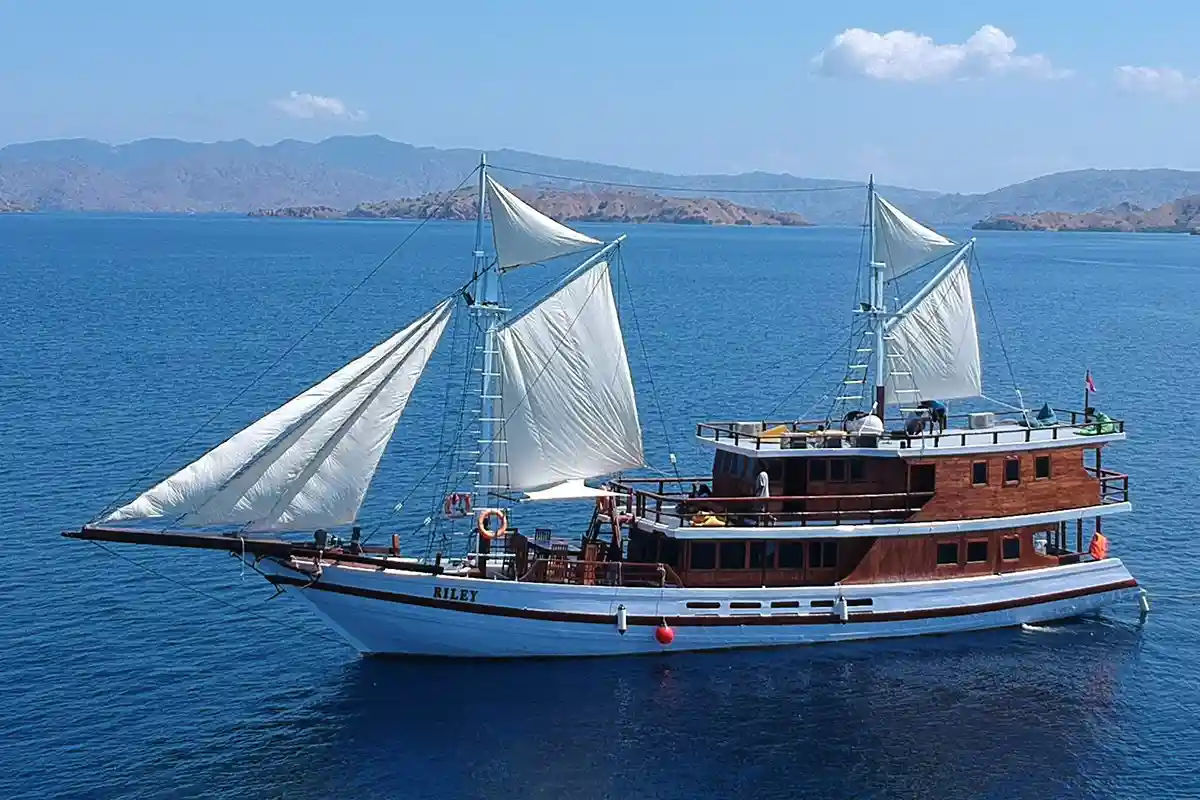
Riley operates across Komodo National Park from Labuan Bajo on Flores, taking in Padar, Komodo Island, Pink Beach, Manta Point and Taka Makassar, and also runs the Lombok–Labuan Bajo corridor.
Komodo National Park sits inside the Coral Triangle, the richest marine region on earth. That is why the same three days give you a dragon on a dry hillside and a manta ray in forty metres of moving water, an hour apart.
The islands below are the ones Riley visits. Which of them you see, and in what order, depends on your duration and the tide on the day.
The stops
Nine places, each on the itinerary for a different reason — a viewpoint, a reef, an anchorage, or an animal you will not see anywhere else.
Sunrise trekThe most photographed viewpoint in Komodo. A short sunrise trek up cut steps opens onto three crescent bays — black, white and pink sand in one frame.
 Ranger walk
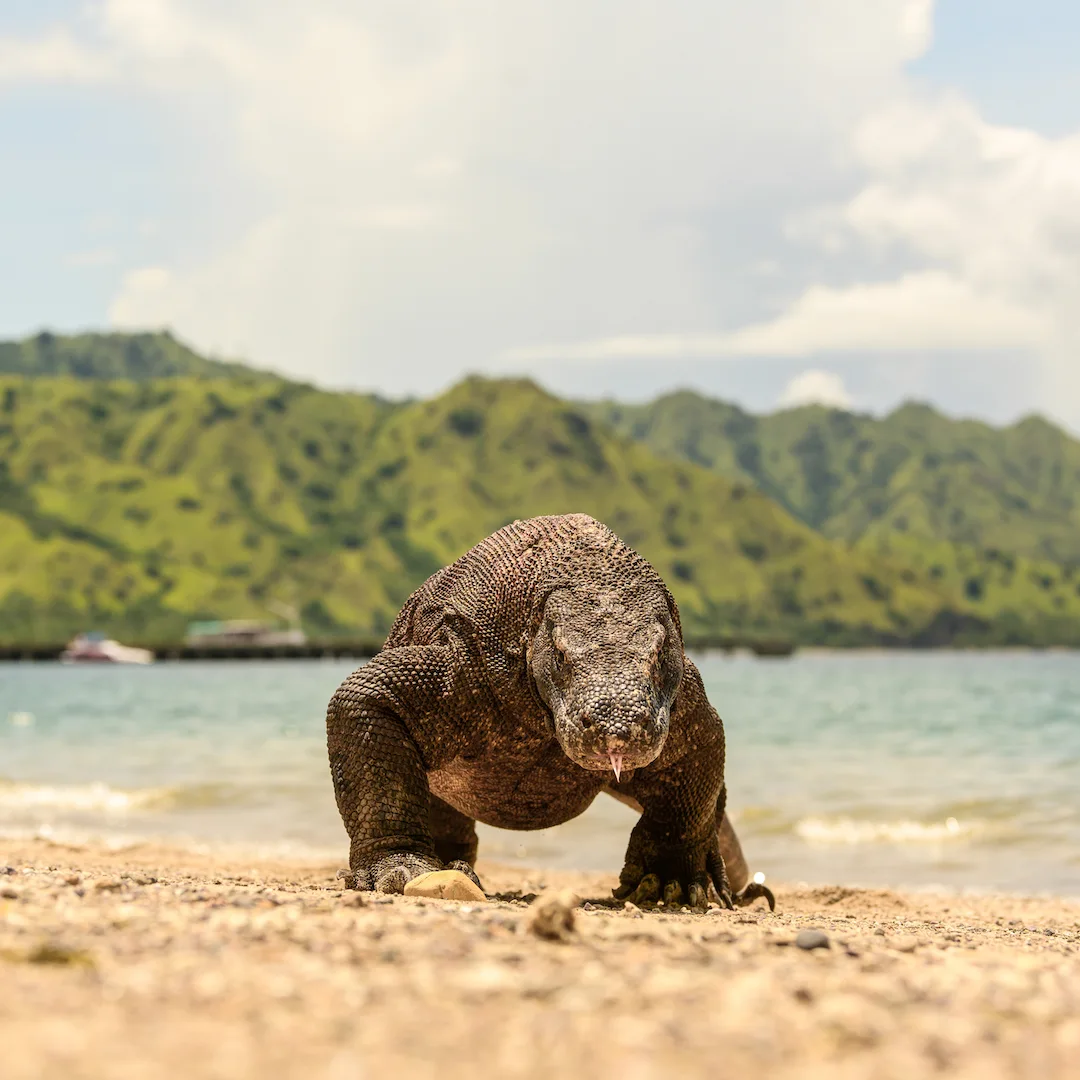
Home of the Komodo dragon and one of the New 7 Wonders of Nature. You walk with a park ranger, in a small group, on marked trails.
 Swim stop
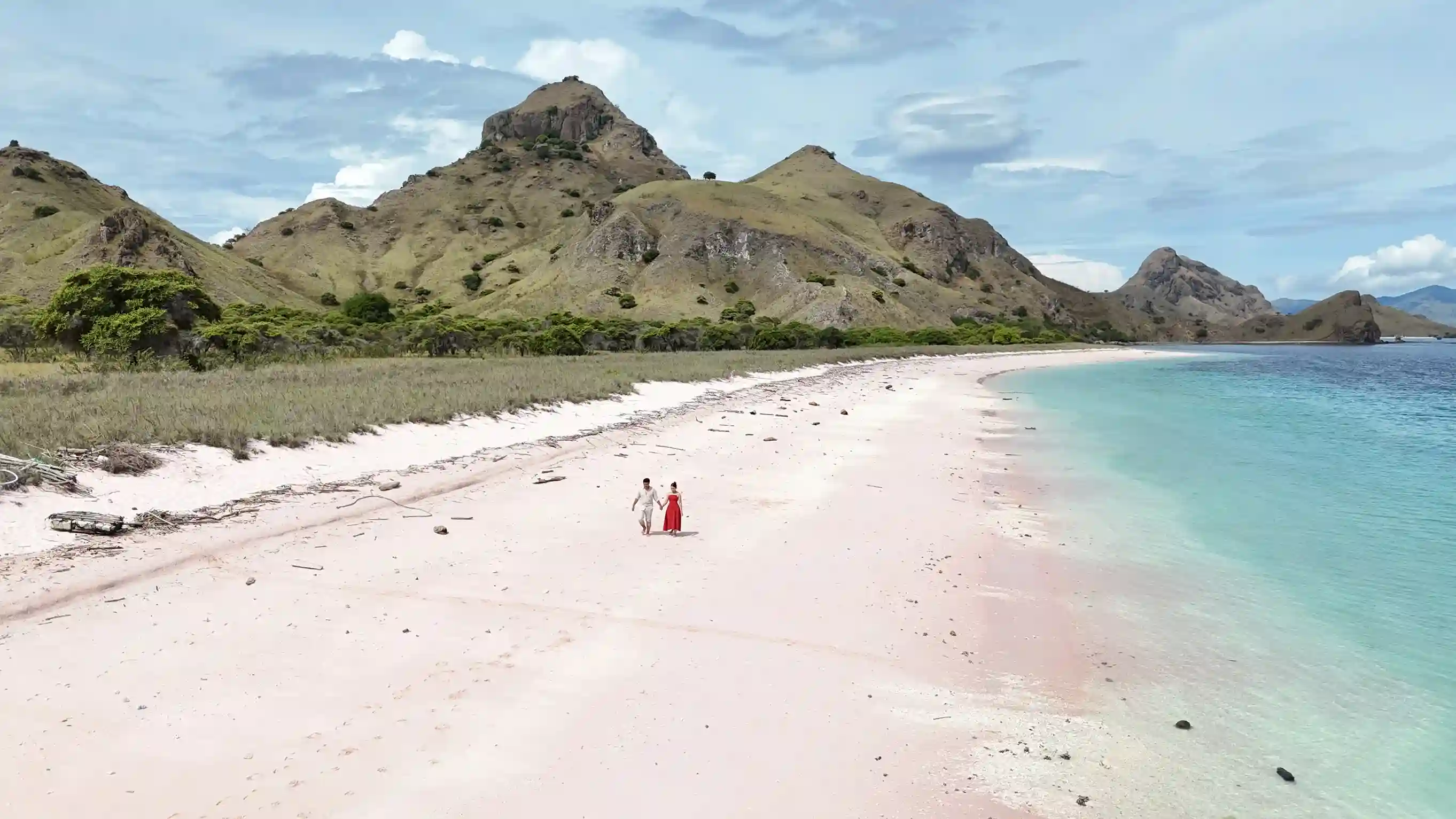
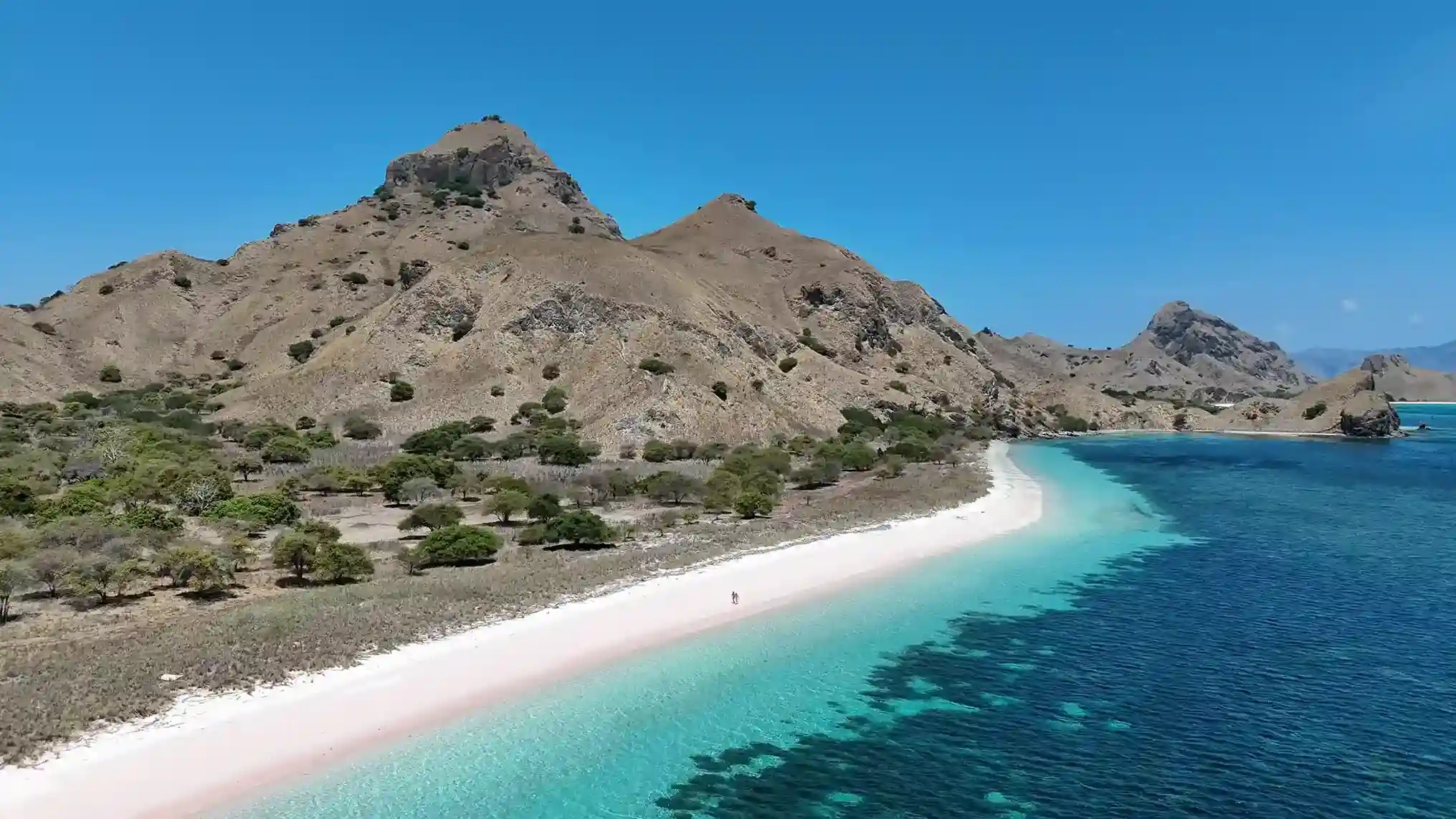
One of only a handful of pink beaches on earth. Crushed red coral mixed through white sand, with calm turquoise water just off the shore.
 Snorkelling
A cleaning station where reef mantas hold position in the current. Sightings are best on a moving tide, which is why the crew time the stop.
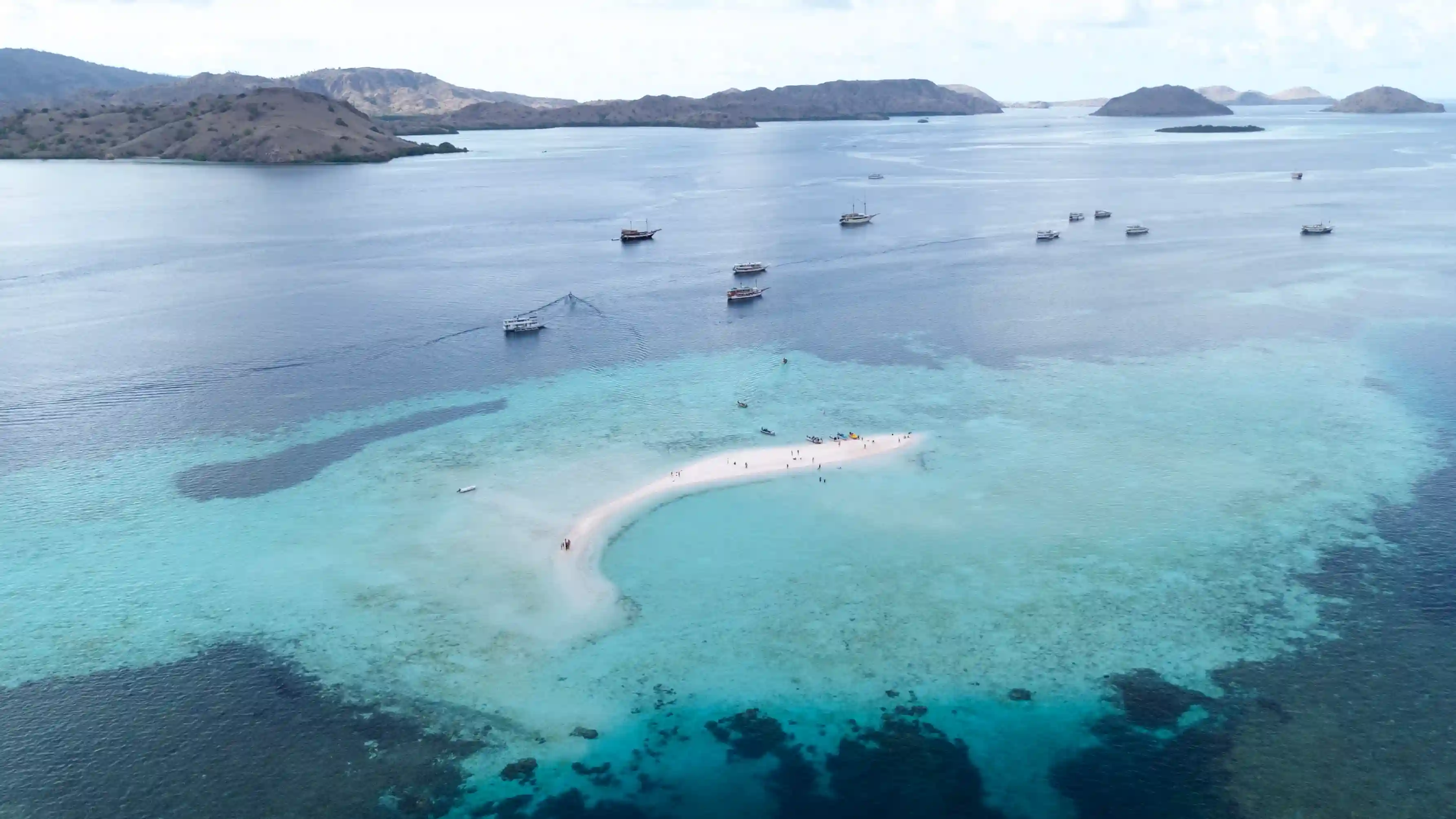 Sandbar
A crescent of white sand that surfaces only at low tide. Step out into the middle of the ocean with turquoise water on every side.
 Short hike
The first stop out of Labuan Bajo. Fifteen minutes of climbing gets you a full panorama of the surrounding archipelago.
 Coral garden
Shallow, sheltered water between three and eight metres — the easiest snorkelling on the route, and the best stop for beginners and children.
 Sunset anchorage
The overnight anchorage on night one. At dusk thousands of giant fruit bats lift off the mangroves and stream overhead for close to an hour.
 Final snorkel
The last swim before the run home — a healthy reef close to Labuan Bajo, shallow enough to see everything from the surface.

Above water
Varanus komodoensis lives on Komodo, Rinca, Gili Motang and a strip of western Flores, and nowhere else on earth. Adults reach three metres and are genuinely wild animals, which is why every walk is led by a park ranger on marked trails and in small groups.
Komodo Island is the headline stop. Rinca — visited on the 4D3N route — is quieter, drier and often better for sightings, because the dragons congregate near the Loh Buaya ranger station.
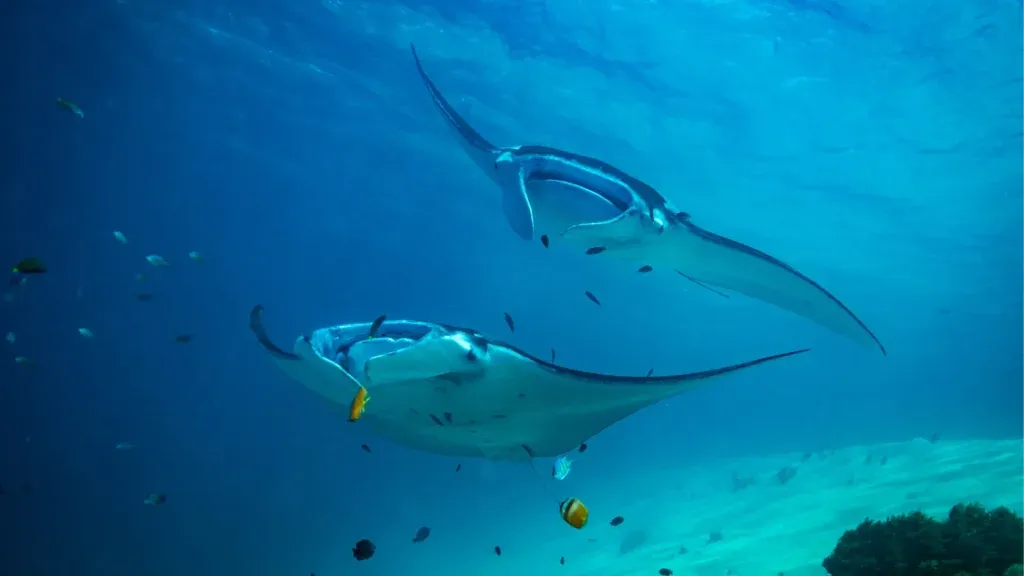
Below water
Manta Point is a cleaning station: reef mantas hold position in the current while cleaner wrasse work over them. Sightings are best on a moving tide, so the crew time the stop rather than slotting it in at a fixed hour.
Batu Bolong is the park's signature pinnacle — a wall of hard coral rising from deep water, best dived on slack tide. Manjarite and Sebayur are shallow and sheltered, the two stops that make snorkelling work for beginners and children.
The park
Pink sand, a sandbar that surfaces at low tide, and the bat flight off Kalong that closes the first evening.


The long way
Riley also runs the corridor between Lombok and Labuan Bajo — the crossing that takes in Satonda, Moyo and the north coast of Sumbawa on the way east.
It is a longer, slower charter and a different kind of trip: fewer set-piece stops, more time under way, and stretches of water where you will not see another boat. Ask the reservations desk if that is the one you want.
The park
No. The 2D1N covers the headline stops; the 3D2N covers them unhurried; the 4D3N adds Kanawa, Siaba and Rinca. The captain also reorders stops for tide and weather.
Rinca is often better for sightings and quieter underfoot, because the dragons gather near the Loh Buaya ranger station. Komodo Island is the larger, more famous park section. The 4D3N route includes both.
Yes, though the colour is subtle and strongest where the wet sand meets the water. It comes from crushed red organ-pipe coral mixed through white sand.
December through February brings the highest concentrations, but reef mantas are resident and seen year-round. The tide matters more than the month.
It is set by the park authority, paid in cash per person, and separate from the charter. Amounts change, so we confirm the current figure when you book rather than publishing a number that goes stale.
Yes. Diving is arranged as an add-on with certified guides and separate equipment hire. Tell us at booking who is certified and what level.
Keep reading
Reservations
Tell us which stops matter most and how long you have. We reply with a route, live availability and a written quote.