
 Riley Phinisi Editorial Desk
In short: Riley Phinisi is a 29-metre, four-cabin private charter phinisi operated by Komodo Luxury, sailing Komodo National Park from Labuan Bajo at 6-9 knots, with Manta Point on its route. Its published specifications list no dive equipment, so confirm tanks, guides and certification requirements with Komodo Luxury before booking.
Divers and freedivers plan Komodo differently from everyone else on board. A photographer wants light. A sunrise walker wants Padar at first light. A diver wants water moving at the right speed, in the right direction, at the right hour, and expects the rest of the day to bend around that. This article explains how a private charter phinisi fits that requirement, using Riley Phinisi as the worked example, and it draws a clear line between what the vessel is and what the operator arranges.
What Riley Phinisi is, and what it is not
Riley is a traditional Buginese phinisi schooner, 29 metres long with a 5-metre beam, built in 2020 in Bulukumba, South Sulawesi, with an ulin (ironwood) hull and teak. It sails as a private charter with four cabins, all ensuite and air-conditioned, for a maximum of ten guests, plus a deck jacuzzi. Home port is Labuan Bajo, Flores, and it operates inside Komodo National Park. The full technical sheet is published on the Riley Phinisi specifications page, and the vessel is operated by Komodo Luxury.
What that specification does not list is a dive deck, a compressor, tank racks, weight systems or a resident instructor roster. Read that as information, not as a gap to be filled by guesswork. Riley is a private charter phinisi whose route includes Manta Point and the classic park anchorages; any diving service attached to a charter is arranged through the operator. If a third-party listing tells you the boat carries scuba gear, ask for that in writing from Komodo Luxury before you transfer a deposit. An honest answer up front is worth more than an assumption discovered on day two.
The numbers that shape a dive-led charter
Every specification below has a direct consequence for a group planning water time rather than sightseeing. These are the published figures for the Riley liveaboard.
| Specification | Figure | What it means for divers and freedivers |
|---|---|---|
| Length overall / beam | 29 m / 5 m | A full-size phinisi hull, not a day boat; deck space for kitting up is a layout question to raise with the operator |
| Cabins | 4, all ensuite with air conditioning | Warm showers and a dry cabin between sessions; four cabins caps the realistic group size |
| Maximum guests | 10 | Small enough that one water plan can suit everyone on board |
| Main engine | Mitsubishi 6D16 diesel | Single main engine; repositioning is planned, not improvised |
| Cruising speed | 6-9 knots | The hard limit on how many anchorages fit into one day |
| Generators | 22 kVA + 30 kVA | Onboard power for charging cameras, lights and torches; confirm sockets and capacity in advance |
| Fresh water | 5 tons | Rinsing after salt water is realistic, but ask how the crew wants it managed over a multi-night charter |
| Navigation | Maritime GPS, VHF radio | Position keeping and vessel-to-vessel communication with the boats around you |
| Home port | Labuan Bajo, Flores | All embarkation, permits and pre-trip logistics run from town |
| Charter rate | USD 3,350 per night (2026), USD 3,800 per night (2027) | Whole-boat pricing, so the cost per diver falls as the group fills |
Current sets the timetable, not the map
Komodo sits between two bodies of water that exchange through narrow channels, and the tidal flow through those channels is what makes the marine life here what it is. It is also what makes the schedule rigid. A site that is generous at one point in the tide can be unsuitable an hour later. That is a planning constraint, not a warning, and it is the single biggest difference between a dive-led charter and a scenery-led one.
Repositioning at 6-9 knots
Cruising speed is the arithmetic behind every itinerary. At 6-9 knots, a boat cannot chase a tide window that sits two hours away and still arrive inside it. A workable dive day therefore clusters sites that are near each other and orders them by the clock, then uses the long repositioning legs for meals, rest or the overnight run. Read the published Riley itinerary structure as a starting frame, then ask the operator to re-sequence it around water time rather than around viewpoints.
Site rotation and why a private charter helps
On a shared boat, the schedule serves the average guest. On a private charter with a maximum of ten guests, the schedule serves whoever is on board. If your group decides at breakfast that the window has shifted and the plan should change, there is one group to consult. That flexibility is the actual product you are buying, and it matters more to divers than to any other kind of guest, because their preferred window is the narrowest.
Freedivers are asking for something different
Freedivers rarely need tanks; they need calm, unhurried surface time, a tender and crew who understand what a dedicated safety buddy is doing, and an anchorage that is not being crossed by traffic. Say all of this to the operator explicitly, because a request for “snorkelling stops” will be planned very differently from a request for line work with a safety diver. If your group mixes scuba and freediving, raise the sequencing with your guide as well; the widely taught guidance is not to make deep breath-hold dives after scuba on the same day, and that constraint reshapes an itinerary.
Never plan solo breath-hold sessions off the swim platform, whatever the visibility looks like. Follow the protocol from your own training agency, and confirm in advance who on board is providing surface supervision.
Send these questions before you commit
- Is scuba equipment included, rented in Labuan Bajo, or brought by the guests?
- Who supplies tanks and fills, and how many are allocated per person per day?
- Which certifications must each diver present, and are current-experience prerequisites applied?
- Is a dive guide or instructor assigned to the charter, and at what ratio?
- Which sites are proposed, and at which tide windows on your specific dates?
- What is the tender arrangement for entries, pickups and drifting exits?
- What oxygen, first aid and evacuation procedure applies, and who holds it?
- Are park fees, permits and any diving surcharges inside or outside the nightly rate?
Everything on that list is an operator question, not a website question. Put it to Komodo Luxury in one message and keep the reply.
What the rate works out to per diver
The charter rate covers the whole boat, so a dive group of six pays a very different per-head figure from a couple. Both published rates appear on the Riley pricing page.
| Guests on board | 2026: USD 3,350/night | 2027: USD 3,800/night |
|---|---|---|
| 10 | USD 335 per person per night | USD 380 per person per night |
| 8 | USD 419 per person per night | USD 475 per person per night |
| 6 | USD 558 per person per night | USD 633 per person per night |
| 4 | USD 838 per person per night | USD 950 per person per night |
These are divisions of the published nightly charter rate only. Park fees, permits and any diving services are quoted separately by the operator, so treat the table as a budgeting floor rather than a total.
Frequently asked questions
Does Riley Phinisi carry dive equipment on board?
The published specifications list the hull, cabins, engine, generators, water capacity and navigation equipment. They do not list dive gear, compressors or tanks. Treat any diving arrangement as something Komodo Luxury organises for your charter rather than standing equipment, and get the inclusion confirmed in writing before you pay a deposit.
Can freedivers use Riley as a support platform?
Freediving needs are different from snorkelling stops: unhurried surface time, a quiet anchorage, tender support and a clear safety buddy arrangement. Describe exactly what your group intends to do when you enquire, name the training agency protocol you follow, and let the operator confirm what can and cannot be supported on your dates.
How many divers can join one charter?
Riley has four cabins, all ensuite with air conditioning, and takes a maximum of ten guests. That caps the dive group at ten people sharing one schedule, which is small enough for a single tide window to suit everyone. Guide ratios and any additional limits for diving are set by the operator.
Which anchorages on the route matter most to divers?
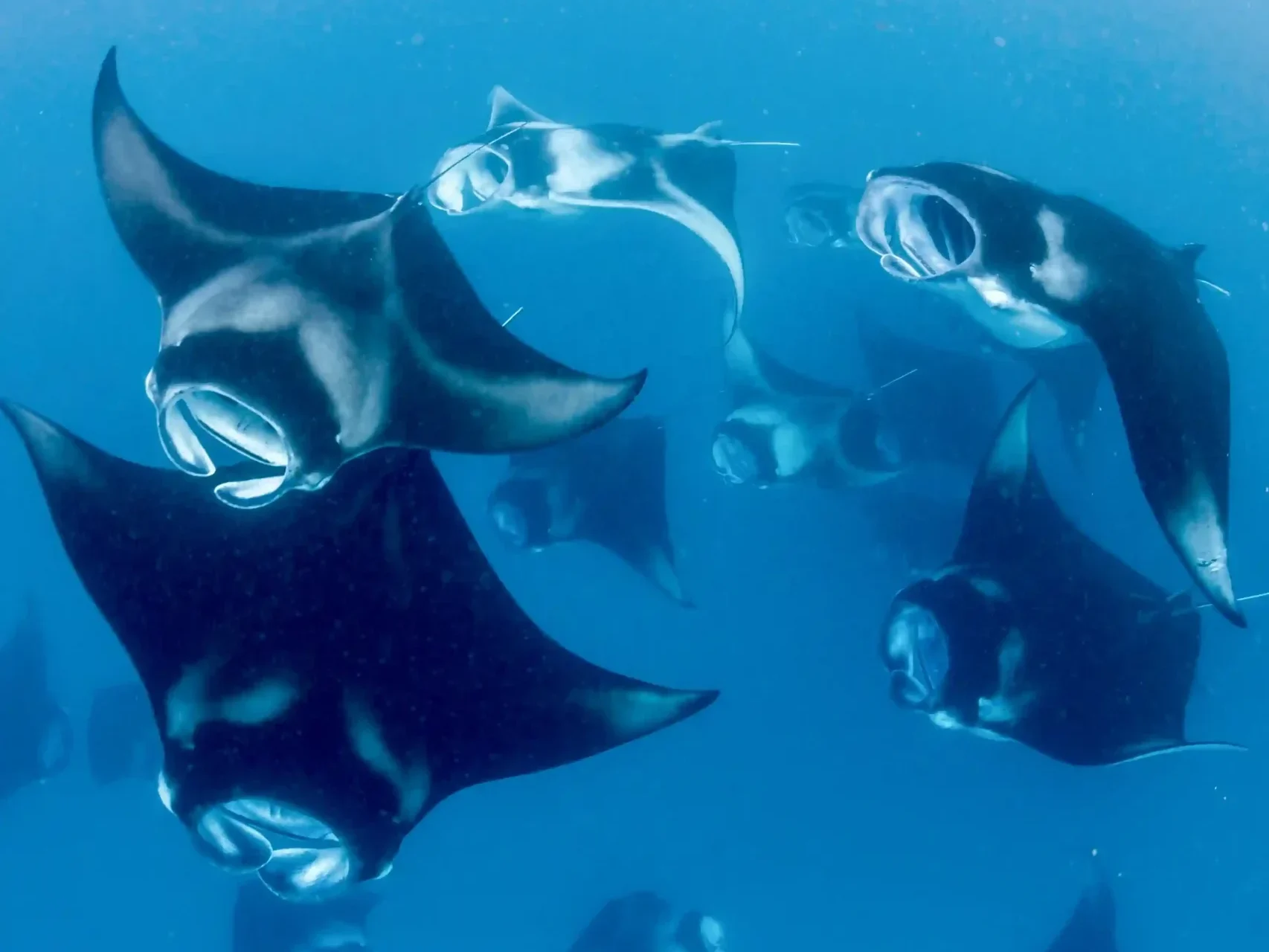
Riley’s route includes Manta Point, Taka Makassar, Pink Beach, Padar Island, Komodo and Rinca for the dragons, and Kalong for the flying foxes. Manta Point is the obvious draw for water-focused guests. Site selection on your specific dates still depends on conditions, so confirm the running order with Komodo Luxury.
How do I book and lock in the dive arrangements?
Availability, rates and dive services are all handled by the operator. Send your dates, group size, certification levels and freediving requirements in one message so the answer covers everything at once. Booking details are set out on the Riley booking page, and confirmation comes back from Komodo Luxury directly.
Planning your charter
If your trip is built around water rather than viewpoints, start the conversation with the dive plan and let the rest of the itinerary follow. Guests weighing surface time against tanks may also want to compare notes with the guide to snorkelling on Riley and the seasonal notes on when to visit Komodo. Vessel details, cabins and route sit on the official Riley Phinisi charter site.
Official availability and booking for Riley Phinisi are handled by Komodo Luxury. Reach the team on WhatsApp at +62 811-3823-875 or by email at [email protected], and put your certification levels, group size and dive or freediving requirements in the first message so the reply is complete.